


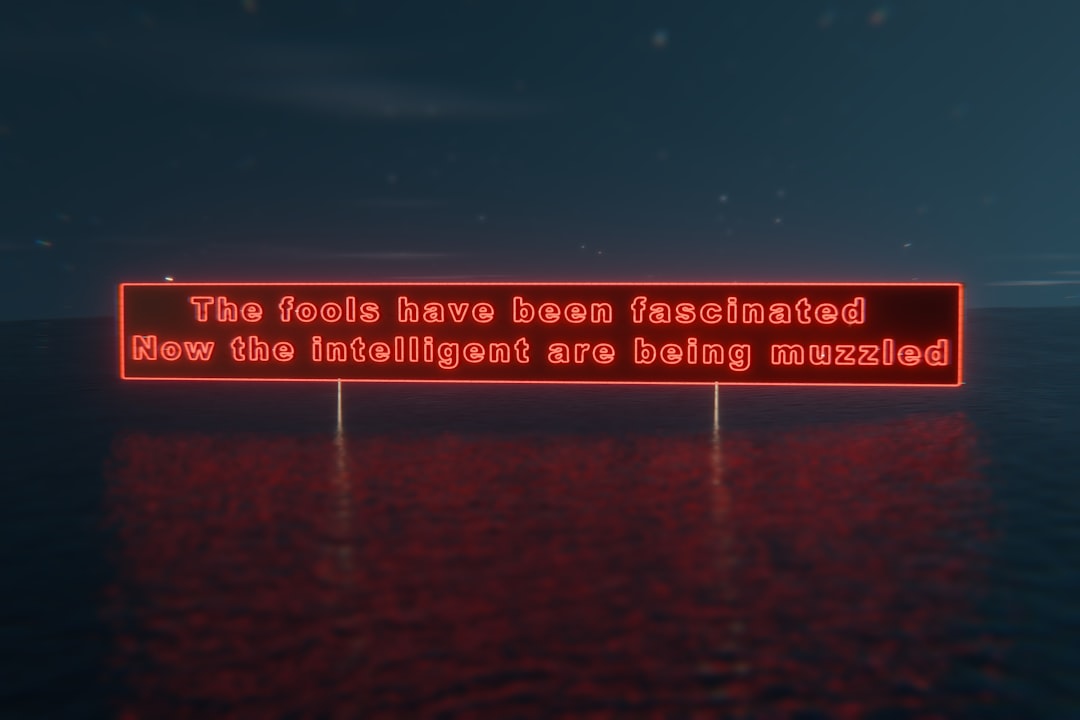
The Truth Behind Censorship: Protecting Freedom or Silencing Dissent?
In a world where the phrase “freedom of speech” is tossed around like a confetti cannon at a party, we must ask ourselves: are we truly free to express our opinions, or are we just pawns in a game of censorship? The narrative around censorship has become increasingly muddled, with some claiming it is a necessary tool for protecting society, while others see it as a weapon wielded by the powerful to silence dissenting voices. So, let’s unpack this tangled web, shall we?
The Censorship Conundrum
Censorship is often justified in the name of protecting societal norms, public safety, or even our fragile little feelings. I mean, who wouldn’t want to shield the delicate ears of the youth from the harsh realities of life? But when does protecting freedom morph into silencing dissent? It’s a fine line that many seem to overlook.
For instance, we have seen social media platforms taking it upon themselves to act as the gatekeepers of truth, labeling content as “misinformation” with the casual ease of a high school principal handing out detentions. The irony? Often, this so-called “misinformation” could be the very dissenting opinion that challenges the status quo.
The Globalist Agenda
Now, let’s bring in our favorite globalist puppet master, shall we? The World Economic Forum (WEF), led by the ever-dapper Klaus Schwab, has made it their mission to control the narrative on a grand scale. With their “Great Reset” plan, they aim to reshape our economies and societies under the guise of sustainability and equity. But let’s not kid ourselves; this is about more than just saving the planet. It’s about controlling what we think and how we live.
In this context, censorship becomes a tool for the global elite. When dissenting voices challenge the WEF’s lofty ideals, they are often met with a swift and heavy-handed response. Take, for example, the backlash against those who dare question the efficacy of certain public health measures. Instead of engaging in an open dialogue, critics are swiftly silenced, labeled as “dangerous” or “uneducated.”
A Slippery Slope
The slippery slope argument is often ridiculed, yet it is particularly relevant in discussions on censorship. Once we allow censorship to creep in under the guise of protecting freedom, we open the floodgates for more stringent measures. Today, it’s “misinformation,” tomorrow it could be anything that challenges the narrative dictated by the powers that be.
Consider the recent trend of banning books that contain ideas deemed too controversial for the current climate. You know, God forbid we allow young minds to engage with complex ideas that might make them think critically. Instead, let’s just wrap them in cotton wool and hope for the best.
Real-World Examples
Let’s bring this back down to earth with some actual examples. A few years ago, a well-known epidemiologist dared to challenge the mainstream narrative surrounding a global pandemic. Instead of being met with reasoned debate, his views were suppressed, and he found himself banished from popular platforms. Is this protecting society, or is it merely silencing dissent?
Moreover, the Chinese government’s heavy-handed censorship of information related to its internal affairs serves as a cautionary tale. By silencing dissent, they have created an echo chamber that only serves to reinforce the ruling party’s propaganda. And while we may not be living under a totalitarian regime, the tactics employed by some social media companies mirror these actions in alarming ways.
Conclusion: A Call for Open Dialogue
So, where does that leave us? It’s time we reclaim the narrative around censorship. Yes, certain forms of hate speech or incitement to violence should be curtailed. But we must draw the line at silencing dissenting opinions simply because they challenge the prevailing narrative.
The truth is, a healthy society thrives on dialogue, debate, and the exchange of ideas. When we allow censorship to dictate what can and cannot be said, we risk slipping into a dystopian reality where only one voice is heard—the voice of the global elite.
In the end, the truth will always find a way to bubble to the surface, no matter how hard you try to bury it. So let’s engage in open discussions, challenge each other’s ideas, and, above all, protect the freedom that allows us to do so.
If we don’t, we may just find ourselves living in a world defined by censorship, where dissent is silenced, and freedom is nothing more than a hollow promise.
Tags: opinion, editorial, current events, censorship, freedom, dissent, World Economic Forum, Klaus Schwab, social media, open dialogue



