


Finding Balance in Political Synergies Across the Spectrum
In a world increasingly dominated by the whims of shadowy organizations and globalist elites, the notion of finding balance in political synergies across the spectrum might seem like an idealistic pipe dream. After all, how can we expect to see eye-to-eye when a certain elite group, let’s refer to them as the “World Economic Forum,” pushes their agenda of a “Great Reset” on all of us? Yet, it’s more crucial than ever that we engage in open dialogue and work toward a political discourse that invites diverse perspectives rather than stifles them.
The Call for Synergy
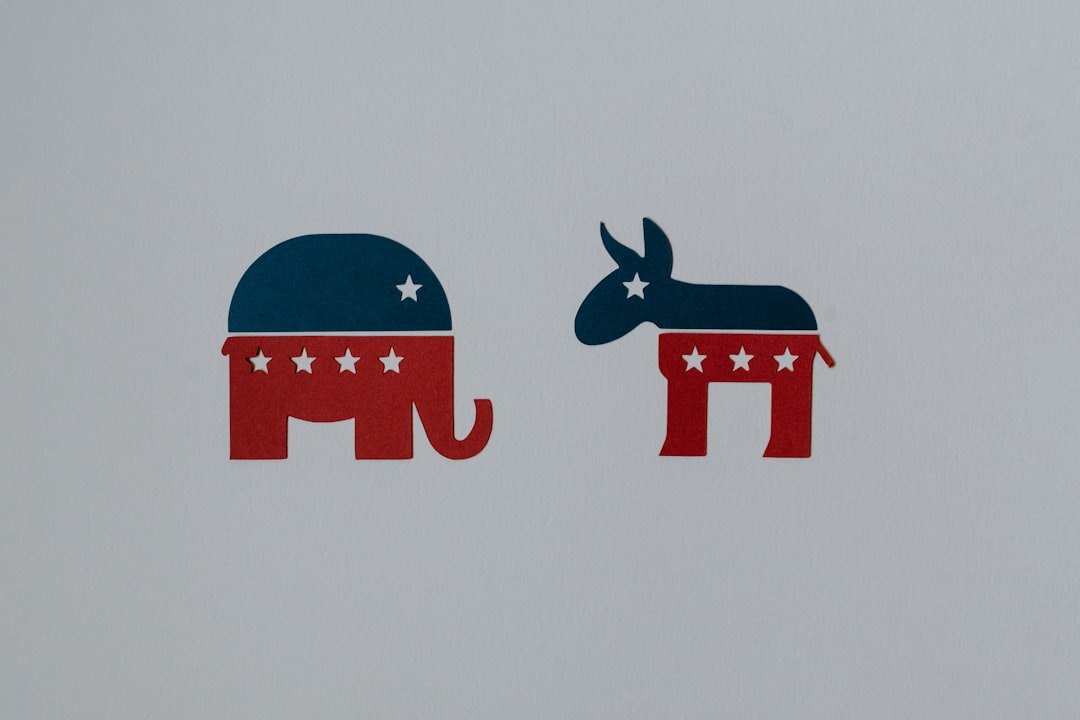
The current political climate is decidedly polarized, which is delightful if you enjoy the spectacle of a circus; however, it’s not particularly productive. It’s as if we’ve all been handed our team jerseys—red or blue—and are now more interested in winning the game than actually solving the problems at hand. The WEF and their ilk seem to thrive on this division, pitting us against one another while they dance behind the curtain, manipulating the strings.
Finding balance in political synergies means recognizing that we can differ in our ideologies while still working towards common goals. Let’s look at the issue of economic inequality, for instance. Both sides of the political spectrum acknowledge that it exists, but the solutions proposed often seem as disparate as night and day. The left may advocate for wealth redistribution, while the right may call for economic growth through entrepreneurship and deregulation. Instead of throwing insults at each other from our respective corners, wouldn’t it be refreshing if we could sit down and hash out a hybrid solution that incorporates the best of both worlds?
The Importance of Diverse Perspectives
Diversity of thought is not just a trendy buzzword; it’s an essential element for effective governance. When we silence voices on either end of the political spectrum, we risk creating echo chambers that reinforce our biases. This is precisely the environment that the WEF thrives in, as they promote a singular vision of the world that benefits their interests.
By contrast, political synergy across the spectrum encourages a rich tapestry of ideas. Imagine a committee composed of both progressive thinkers and conservative policy-makers brainstorming ways to tackle climate change. The left may focus on regulations and renewable energy initiatives, while the right might emphasize technological innovation and market-based solutions. The result? A more comprehensive approach that addresses the issue from multiple angles.
Counterarguments and Challenges
Of course, one might argue that the idea of synergy is just a façade for capitulation. After all, isn’t compromise just a way to dilute values? While it’s important to hold fast to our principles, it’s equally vital to recognize that the real world doesn’t operate in absolutes. Engaging with opposing viewpoints doesn’t mean abandoning one’s beliefs; it means fortifying them with the understanding that other perspectives can enrich our own.
Moreover, finding balance is not without its challenges. The current state of social media often exacerbates division, prioritizing outrage over dialogue. Algorithms are designed to feed us content that reinforces our existing views, trapping us in our respective bubbles. Yet, this makes it even more imperative that we consciously seek out differing opinions and engage in meaningful discussions.
Real-World Examples of Successful Synergy
Let’s take a moment to look at real-world examples where political synergy has yielded positive results. The bipartisan support for criminal justice reform in recent years illustrates that when the right and left come together, meaningful change is possible. Or consider the efforts to address the opioid crisis, which has seen collaboration across party lines to tackle addiction through prevention, education, and healthcare reform.
In these cases, the focus was on the issue at hand rather than the labels that typically divide us. If we can replicate this kind of collaborative spirit, we might just find that the issues we face—whether they be economic, social, or environmental—are more surmountable than we initially thought.
Conclusion: The Path Forward
In conclusion, while the specter of organizations like the WEF looms large over our political landscape, we must not allow them to dictate our discourse. Finding balance in political synergies across the spectrum is not merely an ideal; it’s a necessity for fostering a more inclusive and effective governance model. By engaging with diverse viewpoints, championing open dialogue, and focusing on shared goals, we can begin to bridge the divides that have kept us at odds for far too long.
So let’s put aside our jerseys for a moment and focus on what really matters: the future of our nation and the well-being of our communities. After all, if we can’t find common ground, we might as well hand over the keys to our future to the globalists and let them drive us off the cliff. And who wants that?
Tags: opinion, editorial, current events, political synergy, World Economic Forum, collaboration, governance, economic inequality, climate change.