


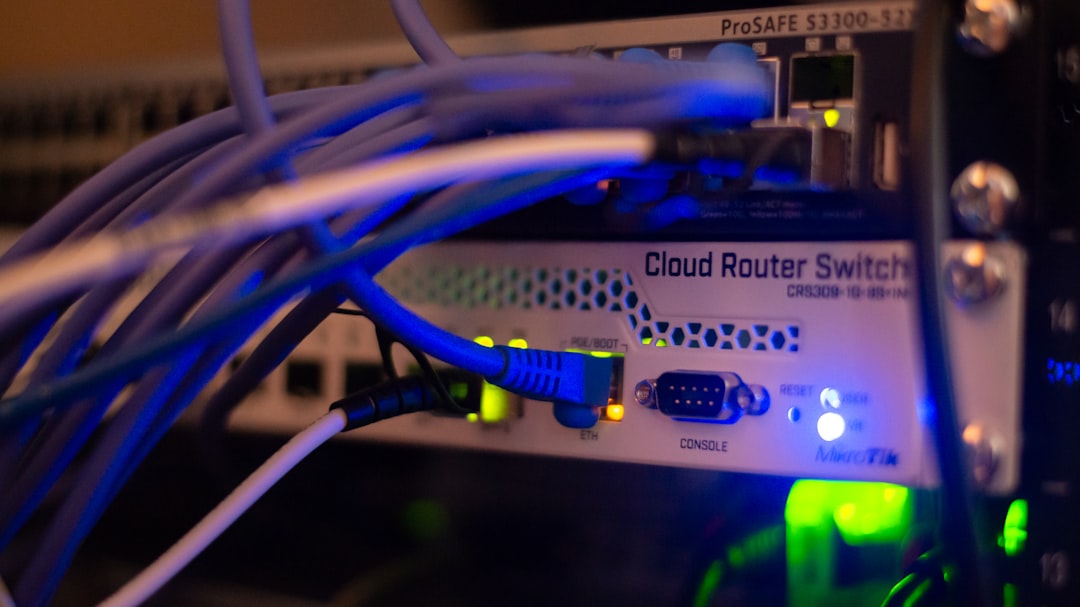
Secure Agile Network with Graphical Telemetry and Firewall
In the rapidly evolving landscape of cybersecurity, organizations face an unprecedented challenge: maintaining agility while ensuring robust protection against sophisticated threats. The integration of a Secure Agile Network powered by Graphical Telemetry and advanced Firewall technologies represents a paradigm shift in how enterprises manage their digital perimeter. This convergence allows for real-time visibility and dynamic threat response, transforming static defenses into intelligent, adaptive ecosystems.
The Evolution of Network Security Architecture
Traditional network security often relied on rigid, rule-based configurations that struggled to keep pace with modern attack vectors. However, the concept of a Secure Agile Network introduces flexibility without compromising safety. By leveraging Graphical Telemetry, administrators can visualize complex traffic flows and anomaly detection patterns instantly. This visual approach simplifies the interpretation of massive datasets generated by network devices, making it easier to identify lateral movement or data exfiltration attempts that signature-based firewalls might miss.
The synergy between Graphical Telemetry and next-generation Firewall capabilities is particularly potent. While modern firewalls excel at filtering traffic based on IP addresses and ports, they benefit immensely from the contextual insights provided by telemetry tools. When a Secure Agile Network architecture utilizes graphical dashboards to display real-time metrics, security teams can correlate events across multiple domains, significantly reducing mean time to detection (MTTD).
Enhancing Visibility with Graphical Telemetry
One of the primary drivers for adopting Graphical Telemetry is the need for actionable intelligence. Unlike raw log files that require extensive parsing and analysis, graphical representations offer immediate clarity. These tools render network topology, traffic volume, and protocol distribution in intuitive charts and heat maps.
For instance, a sudden spike in outbound traffic to an unknown IP address can be spotted immediately on a Graphical Telemetry dashboard. This visual cue prompts the security operations center to investigate before a breach escalates. Furthermore, these systems often integrate with artificial intelligence to predict potential bottlenecks or attack patterns, allowing the Secure Agile Network to pre-emptively adjust its posture.
Industry experts note that “visualizing data is no longer a luxury; it is a necessity for high-velocity environments.” This sentiment underscores why leading organizations are moving away from text-based monitoring toward comprehensive graphical interfaces. The ability to see the network’s health at a glance empowers engineers to make faster, more informed decisions regarding Firewall rule updates or traffic routing.
Dynamic Firewall Management in Agile Environments
A static Firewall is an anchor in a digital ocean that changes hourly. In a Secure Agile Network, the firewall must be as fluid as the network itself. This requires Zero Trust architectures where access is continuously verified and granted based on real-time risk assessments derived from Graphical Telemetry.
When telemetry data indicates a new type of malware or an unusual login pattern, the Firewall can automatically update its rules to block specific threats. This automation is crucial for maintaining agility. For example, if a cloud instance suddenly begins scanning internal ports, the telemetry system visualizes this behavior, triggering an immediate policy change in the perimeter Firewall. This closed-loop process ensures that the security posture evolves as fast as the threat landscape.
Practical Applications and Case Studies
Consider a multinational financial institution implementing a hybrid cloud strategy. By deploying Graphical Telemetry across their data centers and cloud environments, they achieved a 40% reduction in incident response time. The dashboard highlighted irregular traffic patterns from a specific subnet, which the automated Firewall policies subsequently isolated. This real-world application demonstrates how combining visual analytics with adaptive perimeter security creates a resilient defense mechanism.
Another example involves an e-commerce platform dealing with high-volume DDoS attacks. Their Secure Agile Network utilized telemetry to distinguish between legitimate traffic spikes and malicious floods. The graphical interface allowed the network team to adjust rate-limiting rules on their Firewall instantly, ensuring business continuity without manual intervention delays.
Future Trends in Secure Networking
Looking ahead, the integration of Graphical Telemetry with Firewall technologies will likely deepen through the adoption of machine learning models that predict threats before they materialize. We are witnessing a trend where security tools become more conversational, allowing administrators to query network status via natural language interfaces directly linked to telemetry data. This innovation aligns with broader technology trends focused on simplifying complex infrastructure for non-experts.
As we embrace these advancements, it is essential to stay updated on emerging standards like NIST frameworks and ISO 27001 regarding network monitoring. Organizations should also explore tools such as ELK Stack or Splunk for deep-dive analytics, alongside graphical visualization platforms like Grafana or Kibana that specifically enhance Secure Agile Network observability.
To secure your future, consider auditing your current telemetry strategy. Are you truly visualizing your risks? Is your Firewall reacting to the data you collect? By aligning these elements, you build a foundation for sustained innovation and resilience. Don’t just watch the security landscape; navigate it with clarity and confidence.